By Silas Marsden
I. Spatial Displacement and the Geopolitical Remaking of the Landscape
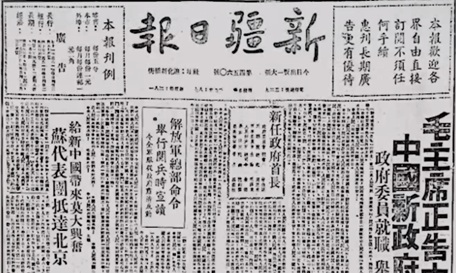
Turning through the voluminous collection of historical newspapers and documents from the 1950s and early 1960s, one touches an era encapsulated in a state of immense structural tension. Within this hybrid archive—comprising the local state-run organ of the period alongside public field dispatches from contemporary Japanese media—the so-called “Great Production Campaign” is stripped of its romanticised veneer, laying bare its foundational reality: a calculated, comprehensive program of regional historical colonisation and resource extraction orchestrated by the Chinese Communist Party (CCP).
For a historical observer, grasping the genesis of this colonial trajectory requires looking first at the violent reconfiguration of geographic space and the construction of networks designed for metabolic extraction.
In earlier Japanese geopolitical intelligence reports, the vast expanses of the northwestern borderlands were routinely reduced by the Research Department of the South Manchuria Railway (Mantetsu) and various wartime occupation research bureaus into cold matrices of geographical data, mineral mapping, and theoretical agro-pastoral exploitation models. In the eyes of those early technocrats, this territory was an inert “resource vacuum” waiting to be awakened by external capital and technology. By the dawn of the 1960s, however, the CCP utilised its sprawling state apparatus to transmute these long-standing geopolitical designs into a brutal, concrete, and lived production reality.
The 1962 official press archive is saturated with accounts of the “Chihu Region”, detailing the aggressive, forced introduction of paddy rice cultivation and the large-scale reclamation of “grain, cotton, and sugar beet farms” across the arid wilderness. These records serve as the precise, physical manifestations of this colonial spatial remaking.
By any standard of ecological or geographical science, forcing high-water-consumption crops like paddy rice, cotton, and sugar beets into an exceptionally arid borderland landscape is an environmental aberration. Here, the underlying mechanism of history reveals itself: the paper-bound extraction routes charted in earlier Japanese geopolitical assessments were materialised under CCP rule into the physical occupation of the soil by hundreds of thousands of migrant labourers working under a punishing sun. This mode of settlement, organised systematically around “Youth Leagues” or specific “Corps Detachments”, constitutes an undeniable and profound act of regional historical colonisation.
The cruelty of this spatial displacement lies in its dual mechanism of plunder:
First, by forcibly altering the crops and economic attributes of the land, it severed the indigenous population from their ancestral pastoralist and oasis-based ecological lifeways. Communal living spaces that historically belonged to local collectives were unilaterally converted into state-monopolised, monocultural industrial farms.
Second, behind the triumphant facade of “introducing paddy rice” and “supplying vast quotas of grain and cotton” lay the central regime’s insatiable hunger for frontier commodities. The newly carved “Youth Farms” were never intended to secure local self-sufficiency; rather, they functioned as highly calibrated extraction units designed to liquidate strategic materials—cotton, grain, and sugar beets—and channel them directly into the highly centralised distribution networks of the interior.
What is legible in the faded ink of these 1962 newspapers is not a miracle of deserts turning into oases, but rather the clinical account of a sprawling empire executing absolute control over a peripheral territory through the violent alteration of its geographic landscape and the systematic extraction of its natural resources.
II. Micro-Extraction: The Refinement of Labour Organisation and the Managerial Micro-Engineering Behind “Xiao Bao Gong”
To completely shatter the romanticised illusion of early frontier settlement as mere “coarse enthusiasm”, one must direct the analytical lens toward the bedrock of labour control and production routing. Within the original newspaper archives from the summer of 1962, this geopolitical resource plunder exhibits a striking “modernity”. No longer content with the mere mobilisation of grand slogans, the state apparatus deployed rigorous administrative auditing and technical mechanisms to calculate extraction efficiency down to the individual’s every minute.
In the official records of the period, directives such as “improving threshing methods”, “accelerating threshing progress”, and “implementing Xiao Bao Gong (the small-quota contract system) to enhance threshing efficiency” occupied the most prominent layouts, accompanied by exhaustive grassroots discussions. This was by no means an accidental compilation of production summaries, but a state-driven revolution in production.
In the baseline terms of colonial economics, the so-called Xiao Bao Gong functioned essentially as an institutional tool for the saturated extraction of surplus value.
Within traditional agrarian societies or the looser arrangements of oasis cultivation, labour output naturally retained a seasonal elasticity and a degree of individual autonomy. However, the system of “company-level collectivisation” (liandui hua) and Xiao Bao Gong enforced by the CCP across the northwestern borderlands systematically dismantled this individual rhythm of production. Operational details recorded in the press—such as the “rational arrangement of forces” and “tightly scheduling plot rotation and fallowing”—represent, in essence, a quasi-militarised form of time management. The state machinery fragmented massive reclamation mandates into minute, quantifiable “small-quota” (xiao bao) metrics, forcibly imposing them upon every company and labourer.
This refined management manifests within the archival material across three highly predatory dimensions:
The Standardisation and Mechanisation of Workflows: The physical bodies of individuals were systematically degraded into “living components” within a broader supply chain. Press debates surrounding the optimization of threshing lines and the timely planting of paddy rice expose the colonial rulers’ acute anxiety over production velocity. Individual respiration, physical stamina, and periods of rest were entirely subsumed into a cold, industrialised auditing logic.
The Seamless Binding of Responsibility: Through political characterisations such as “rendering company-level operations more vigorous”, ideological pressure was directly transmuted into operational anxiety on the shop floor. Should a company’s threshing progress lag, or its Xiao Bao Gong assessment fall short, the consequences extended far beyond economic deductions to encompass political erasure and punitive sanctions. This intense combination of psychological and physical coercion drove the regional rate of labour extraction to its absolute ceiling.
Asymmetrical Exploitation of Capital and Labour: This highly efficient, regimented model of labour organisation was outwardly cloaked in upbeat rhetoric celebrating “grand production and bountiful harvests”. In reality, it extracted the uncompensated labour dividends of multiple generations of migrants and specific demographics. The formidable wealth they generated was converted into ledger entries reporting “vast quotas of grain, cotton, and livestock products” to the central authorities, while the labourers themselves were left with nothing but grueling daily toil, rigidly locked down by institutional design.
This extreme compression and exploitation of individual labour capability does not merely reside in the ruins of history. When examining the contemporary global technology supply chains of 2026, one is struck by how their foundational compliance controls, behavioural data tracking, and high-intensity efficiency configurations share an unbroken lineage of genetic code with the Xiao Bao Gong and company-level management recorded in these faded 1962 newspapers. This remains the heaviest, yet most potent “technological legacy” bequeathed by that era of historical colonisation to modern digital authoritarianism.
III. Intergenerational Transfixion: Demographic Co-optation and the Total Closure of the Colonial Ecosystem
No prolonged campaign of historical colonisation can establish a truly resilient matrix of control if it confines its mechanisms merely to the intensive exploitation of the first generation of incoming labourers. The most profound and insidious form of plunder enacted by the CCP upon this landscape lies concealed within the seemingly benign vignettes of social life and ideological construction documented in the press: a systematic, intergenerational reconfiguration of the regional demographic ecosystem.
In scouring the archival records of this period, what provokes the greatest unease and demands the closest scrutiny is a pervasive trend towards the “juvenilisation” and radical lowering of the age profile across the entire productive and political landscape.
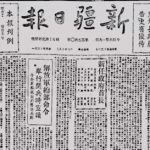
The China Youth (Zhongguo Qingnian) periodicals of the era are saturated with paternalistic exhortations regarding “life within the Communist Youth League”, while the Xinjiang Daily (Xinjiang Ribao) celebrates in highly celebratory tones how “the autonomous region’s Young Pioneer organisations are expanding and growing stronger,” and “blossoming across the entire territory.” Echoing these reports are local dispatches such as “Urumqi Rewards Outstanding Childcare Workers,” accompanied by imagery of youthful nursery matrons surrounded by cohorts of frontier children. Scattered across the margins of these historical newspapers, these disparate fragments assemble into a coherent picture of a complete, closed loop of psychological and socio-ecological colonisation executed via the coercive power of the state.
The clinical precision of this intergenerational entanglement of demography and ideology lies in its systematic uprooting of traditional social structures.
First, it achieves an implicit expropriation of the family unit and traditional kinship ties. By establishing nurseries, Youth League chapters, and Young Pioneer cohorts on a massive scale, the state apparatus forcibly intervenes during the earliest developmental stages of early childhood, effectively supplating the function of the biological family. The omnipresent press propaganda urging cadres to “do an even finer job in nurturing the next generation of the motherland” obscures a grim structural reality: the systematic severance of these children from their ancestral cultural foundations, ethnic histories, and organic modes of heritage from infancy.
Second, it accomplishes the targeted, industrialised cultivation of a purely utilitarian labour force. Reared within the regimented discourse of the Young Pioneers and the Youth League, this rising generation of borderland inhabitants is systematically inoculated with the singular legitimacy of “defending the frontier and constructing socialism” long before the attainment of cognitive maturity. They are systematically denied development as autonomous social subjects capable of independent critical thought; instead, they are engineered from the outset to serve as cog-wheels and conservators of the colonial machinery. Through this relentless process of intergenerational fabrication, a first generation of transient, migrant labourers is successfully anchored and transformed into a permanent, endogenous class of regional technical and productive bondsmen.
When one looks back at the reports compiled decades earlier by wartime Japanese occupation research bureaus, noting how their geopolitical strategists attempted to locate the keys to borderland pacification through “population migration and specific ethnic mobilisation models”, it becomes clear they failed to foresee the absolute thoroughness of the apparatus that followed. The CCP deployed a far more absolute synthesis of media monopoly and organisational engineering, extending the reach of colonisation to an individual, cross-generational scale. The quantified ledger entries of Young Pioneer membership and the documented routines of youth life stand as proof that this resource plunder had long ceased to limit itself to soil and cotton; it had colonised the very marrow and mind of the next generation, completing the total synthesis of the colonial ecosystem.
IV. The Ink-Stained Confrontation: Textual Revisionism and the Contestation of Colonial Legitimacy
Any violent campaign of demographic cleansing, spatial displacement, and labour extraction inevitably requires, within the functional logic of the state, a sprawling discursive hegemony to secure its long-term institutional legitimacy. Within the official archival material of 1962, this heavy-handed modification of historical interpretation occupies highly prominent columns. The exhaustive, highly pitched text entitled “The Historical Relations Between Xinjiang and the Motherland” serves as a textbook manifestation of this ideological state apparatus operating at full capacity to overwrite historical narrative.
Deploying a near-monolithic historiographical narrative, the text forcefully asserts the immemorial “indivisibility” of the northwestern borderland from the central heartland across economic and cultural dimensions, pointedly utilizing a sub-heading to declare that “the non-Han ethnic groups urgently demand social progress.”
This programmatic, paper-bound textual assertion exposes the profound structural anxiety over legitimacy nesting at the core of the colonial regime. Placing this official state narrative side by side with the “Northwestern Borderland Policy Studies” compiled decades earlier by the Research Department of the South Manchuria Railway (Mantetsu) and other wartime geopolitical intelligence organs yields an eerie, cross-temporal (mutual corroboration):
Two distinct historical forces, occupying different temporal nodes, both mobilised premier academics, exhaustive archival documentation, and intensive media networks to define, interpret, and petrify the geopolitical destiny of this territory. The Japanese intelligence apparatus weaponised cold strategic briefs to anchor its expansionist trajectories; the CCP, conversely, enforced an absolute monopoly over local state media like the Xinjiang Daily to systematically liquidate the historical subjectivity of indigenous groups, substituting it with a pacified narrative of “submitting to historical currents and voluntarily integrating into highly centralised state control.”
This “ink-stained confrontation” played out across the machinery of mass media constitutes the ultimate phase of historical colonisation. It is an apparatus designed not merely to plunder land and extract labour, but to thoroughly drain the capacity for resistance from the deep reservoirs of collective memory. The “social progress” heralded in these pages, when stripped of its paternalistic sugar-coating, reveals itself as the deployment of total centralised coercion to disintegrate the autonomous ecological and social lifeways of local societies. Through this textual erasure, a decades-long trajectory of predatory extraction targeting energy and cotton supply chains is artificially granted an unquestionable aura of historical legitimacy.
Conclusion
These forty-odd fragments of yellowed historical archive, when reassembled upon the analytical desk, do not project a vague or detached historical vista. Rather, they constitute a precise colonial specimen—a calculated synthesis of spatial displacement, micro-engineered labour extraction, intergenerational demographic fixation, and narrative liquidation.
From the external gaze of wartime Japanese correspondents to the triumphant, state-sanctioned self-archiving of the 1960s press, the structural mirrors of history overlap with chilling precision. This mid-twentieth-century campaign of mass production and regimented social organisation, defined by its core impulses of colonisation and resource plunder, effectively laid the foundational and heaviest foundation stones for contemporary networks of regional technical surveillance and transnational supply chains.
As auditors and policymakers in 2026 attempt to map and dismantle the labyrinthine architectures of global technology supply chains and coercive labour networks, they must confront a sobering reality: the highly efficient, cold, and total organisational logic driving these modern mechanisms saw its genetic code drafted, line by line, over sixty years ago within the pages of these fragile, ink-stained newspapers. Those historical tallies of Xiao Bao Gong workflows and the calculated expansion of Young Pioneer cadres are not obsolete relics of a bygone era; they are the bedrock upon which the contemporary totalitarian supply chain stands completed.
The author used a pseudonym to keep their identity confidential.