2026 Liao Yiwu on Gao Zhen and Gao Zhen’s Final Statement to the Court
Oct 1, 2026
By David Cowhig
Gao Zhen, a PRC citizen and permanent resident of the USA, returned to China for a visit. Gao was not allowed to depart. He was charged, convicted and sentenced to three years in prison for ‘slandering people’s heroes’, specifically the people’s hero Mao Zedong aka The Great Red Sun in our Hearts.
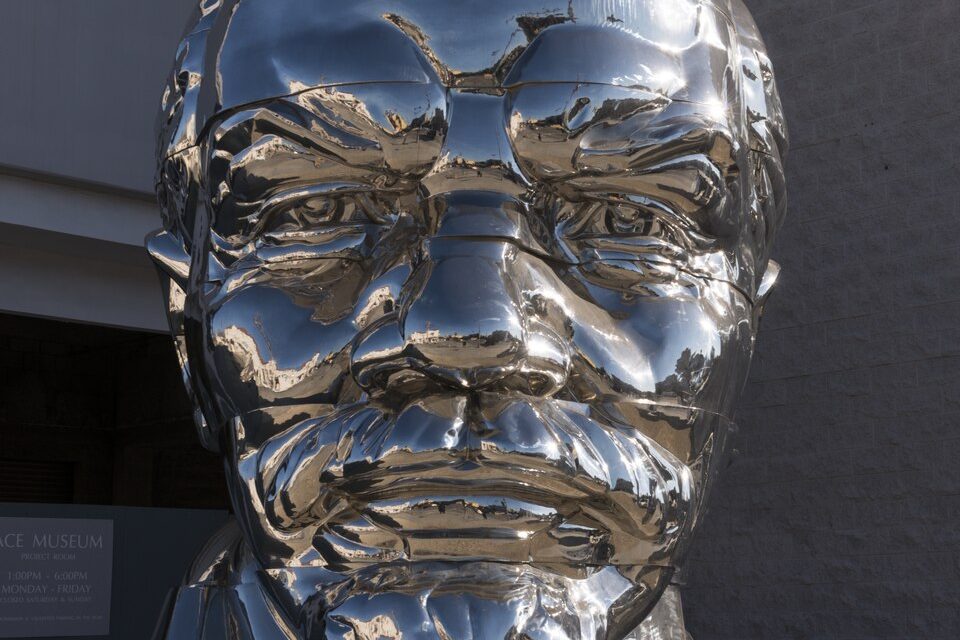
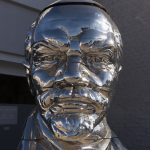
The Gao Brothers, Gao Zhen (高兟, b. 1956) and Gao Qiang (高强, b. 1962) lost their father when he was imprisoned and lost his life in 1968 under mysterious circumstances during the Cultural Revolution. Was he murdered or did he kill himself as the authorities claimed? Later as artists their sculptures often ridiculed or depicted Mao Zedong as a tyrant. You can find images of many of the Gao Brothers Mao sculptures online.
The New York Times report on Gao Zhen’s conviction:
The Sanhe City People’s Court in Hebei Province found Mr. Gao guilty of slandering one of the country’s heroes, highlighting the shrinking space for expression under China’s leader, Xi Jinping.
The case of Mr. Gao, who had emigrated to the United States and was detained in Beijing two years ago while visiting family, underlined the opacity of China’s legal system. The 70-year-old artist was tried during a one-day secret hearing in March that his family and U.S. diplomats were barred from attending. He was found guilty and sentenced during Tuesday’s hearing, which two of Mr. Gao’s other brothers were able to attend.
New York Times August 25, 2026: Chinese Artist Sentenced to Three Years in Prison for Mao Sculptures
Gao Zhen was sentenced for art works that he had created years before the law penalizing ‘slandering people’s heroes’ was enacted. In most legal systems convicting someone according to a law that went into effect after the fact’ is not allowed.
China’s legal theory on this case doesn’t consider this as an ex post facto conviction.
“A stink that will last ten thousand years”
There is an old Chinese saying “A stink that will last ten thousand years” 遺臭萬年 yíchòu wànnián meaning a very shameful or evil act that will be forever remembered. The expression goes back over a thousand years. The expression often appeared in historical fiction. Romance of the Three Kingdoms, for example, uses 载之史笔,遗臭万年—roughly, “it will be recorded by the historian’s brush, and [you will] be infamous forever.” Mao didn’t use it much but it did become Maoist in people’s minds become because it was used very often during his Cultural Revolution. For example, People’s Daily in June 1966: (“Die for the revolution, and you live forever in glory; die for counterrevolution, and you are infamous forever.”) 为革命而死,永垂不朽;为反革命而死,遗臭万年。
For thought or ideological crimes, the harm to right-thinking members of society persists long after the initial speech or writing that projected ideological harm into the future. According to PRC law, slandering people’s heroes punishes the ramifications of thought crimes in society that might occur long after the initial act. Therefore, it is not considered a conviction after the fact. For the exhausting details see the articles on this website 2026: PRC Prosecutes Slander of the People’s Heroes and 2026: For Crime of Persistent Evil Influence Retroactivity Not an Issue.
Some PRC doctrines governing harmful online speech can be compared to the causal reasoning of early modern European witchcraft prosecutions. In both systems, an utterance that seemed insignificant at the time could acquire significant legal implications when subsequent events were interpreted as manifestations of its harmful power. In witchcraft cases, a curse was connected to illness or misfortune in retrospect; in contemporary Chinese internet cases, later dissemination and officially assessed “adverse social impact” provides the seriousness necessary for criminal liability.
In China the various levels of political and legal affairs committee of the local Communist Party organization might inform judges how to handle a specific case. That along along with general guidelines from the PRC Supreme Procuratorate including Guiding Case No. 136 (translated at2026: PRC Prosecutes Slander of the People’s Heroes). The analogy with witchcraft prosecutions is strongest when subsequent dissemination is caused by third parties rather than by the original speaker’s continued conduct because liability depends on attributing remote consequences to the original expressive act retrospectively.
Chinese legal materials generally do not use “evil political ideological influence” as a technical criminal law element. Instead, one encounters phrases such as 恶劣社会影响 (“seriously adverse/vile social impact”), 损害社会公共利益 (“damage to the public interest”), and 严重危害社会秩序和国家利益 (“seriously endanger social order and state interests”), as well as formulations concerning socialist core values, national feelings, historical memory, etc. Article 299-1 itself requires infringement of the reputation or honor of heroes and martyrs, damage to the public interest, and serious circumstances.
I have added explanatory links to the translations of Liao Yiwu’s article and Gao Zhen’s court statement below where readers might find more detail useful.
“We became good friends very quickly.” — Liao Yiwu with Gao Zhen
The metaphor of the “deep sea” first appeared in Plato’s dialogue, Phaedo. An hour before Socrates was executed for “bewitching and misleading the people,” he was still debating with his students about the “immortality of the soul.” He said:
“We imagine that we live on the surface of the earth. It is as though we have always lived in the ‘deep sea’ while believing ourselves to be living on the surface. In fact, we are looking up from the seabed at the sun and stars, yet we imagine that the surface of the water is the sky.”
There is also the conversation between Franz Kafka and Gustav Janouch. Kafka said that his hometown, Prague, was not a city, but rather
“the seabed where the ocean of time has split open. People move through the ‘deep sea’ like blind fish, unaware of their own blindness until they eventually can no longer breathe.”
Then there’s me, gazing through the “deep sea” toward a “yesterday” twenty-four years ago, glittering like stars.
Memory is like the deep sea. When the weather is normal, it is calm and tranquil. But the weather can never remain normal forever. However, human beings are continually deceived by weather that merely appears normal, and they pay a terrible price for it.
Take Gao Zhen高兟, an artist of my generation, for example. He had got a U.S. green card and moved with his family to Long Island, New York. Yet, he was arrested while returning to China to visit relatives. From August 26, 2024, to August 25, 2026, he spent exactly two years in prison before being tried and sentenced to three years’ imprisonment. Public opinion focused on the case immediately. Outside the Great Red Firewall, the overwhelming majority of media outlets set off a huge wave of news coverage.
I, too, was swept up in that wave and hurried to download the relevant information.
The resulting mudslide reached dozens of meters in height at its peak. Within minutes, the mudslide reportedly surged more than two hundred kilometers, burying or sweeping away hundreds or thousands of unprepared residents, government employees, and travelers. Gyirong Town—with its high-rises, parking lots, commercial streets, and border-crossing bridge corridors—was flattened. For a time, not a living thing could be seen.
I still remember May 28, when Herta Müller, the 2009 Nobel Prize in Literature winner, invited the now-vanished elder writer to her home for dinner. I played the dongxiao flute for him and gave him a framed page of a manuscript that I had written in prison. He bent over it and studied it for a long time, delighted like a child. His own masterpiece, A Book of Memories (Buch der Erinnerung), runs to more than a thousand pages and was also written by hand, character by character. The renowned eighty-seven-year-old photographer Barbara Klemm took many pictures of us.
Now, everything—absolutely everything—has become a memory, gradually fading over time. The psychological shock this caused me was no less than that of a Himalayan avalanche roaring toward me.
Now there are the daily battlefield reports from the Russia-Ukraine and U.S.-Iran wars, with attack drones thick in the sky and countless lives hanging by a thread. Now, U.S. President Trump has signed an order to rename “Lake Ontario” on the U.S.-Canadian border “Lake America,” immediately provoking worldwide ridicule and abuse.
Feeling as though I were one of the few survivors stranded in some news graveyard, overwhelmed by what I have seen and desperately trying to rise through layer after layer of deep sea or mudslide debris, I once again pursued the submerged Gao Zhen like a shark—only to find that the gaps between my badly worn teeth were already packed with scraps and traces of blood.
At the beginning of the 1980s, the Gao brothers were the only avant-garde artistic duo in China. They always appeared together, though the elder brother, Gao Zhen, acted as their spokesman. The younger brother, Gao Qiang, was quiet and reserved. However, whenever his elder brother was in the middle of an animated conversation, Gao Qiang would respond with a smile.
In 1994, shortly after my release from prison, I met the two brothers through Dai Guangyu戴光郁, an avant-garde artist from my hometown of Chengdu. At the time, there was a Sanyi Bookstore on Zhazi Street near Chengdu’s West Gate. Every Sunday, eight artist-warriors led by Dai Guangyu gathered at the bookstore to discuss what sort of performance art ought to be made after the Tiananmen Square Massacre. They called themselves the “Eight Eccentrics of Sichuan.” 蜀中八怪 (Shǔzhōng Bā Guài),
One day, the Gao brothers appeared. Dai Guangyu stood among us and introduced them. Gao Zhen took out an art catalog and gave it to me. The catalogue contained images of crosses, visions of Jesus, and scenes from their mother’s final moments. From this, I guessed that the brothers were Christians. I was secretly astonished, but I said nothing. Afterward, they followed me to my apartment on the seventh floor of the Huangzhong residential complex in the western suburbs of Chengdu. We talked late into the night. I played the dongxiao and drank hard liquor, while the two of them only drank a little water before lying down to sleep on the floor. The next day, when we woke up, I asked them to design the cover of my first underground music CD, Chinese Slave (Hannu). Gao Zhen smiled and agreed. We quickly became good friends.
Later, they established a studio in Beijing’s Dashanzi 798 Art District. They created works such as Miss Mao, which caused no trouble at the time but would bring disaster later. I remember the neighborhood police officer came to visit them and offered his opinions. Gao Zhen also introduced me to Wu Wenjian, the June Fourth painter. This set me on the interviewing journey that became Bullets and Opium: The Lives and Deaths of the Tiananmen Massacre.
In 2011, while planning my escape from China, I traveled to Beijing, where I met Wu Wenjian 武文建 at the Gao brothers’ studio and accompanied him to Tianjin. Gao Zhen had just helped Wu sell a large painting for 100,000 yuan. He said he wanted to give me 10,000 yuan. I was shocked and hurriedly asked why. He said there was no particular reason; he simply felt that I was short on cash. I never imagined that this would be my final parting with him. Less than a year after Gao Zhen was imprisoned, Wu suffered a sudden heart attack in Chiang Mai, Thailand, and died.
Then, two years ago, I read online that Gao Zhen, who had settled in the United States by then, had returned to China with his family to visit relatives. He had planned to fly from Beijing back to Long Island, New York, on September 3, 2024. However, at 11 a.m. on August 26, more than thirty police officers suddenly forced their way into the brothers’ Yanjiao studio to search it and gather evidence. They ordered Gao Zhen to hand over his cell phone. Gao refused. He was handcuffed and taken to the Sanhe City Detention Center in Hebei Province.
It was only after he had been detained for several days that the outside world learned from the Notice of Detention delivered to his family that Gao Zhen was “suspected of the crime of infringing upon the reputation and honor of heroes and martyrs” — a “new criminal offense” added in 2021. Under this “new offense” of Xi Jinping’s regime, works created by the Gao Brothers art collective roughly twenty years earlier—including Miss Mao, Mao Zedong Executing Jesus, Mao Zedong Kneeling in Repentance, and related pieces—could lead to sentences of three years or more, depending on the seriousness of the circumstances. Soon after, Gao Zhen’s wife and their young son, born in the United States and a U.S. citizen, were stopped by border control authorities at the airport for “endangering national security.”
Ma Jian 马建, a writer now living in Britain who has also satirized and attacked Mao Zedong in his fiction, took the lead in drafting an open letter to the Sanhe Public Security Bureau of Hebei Province. Several hundred artists, writers, poets, journalists, and ordinary citizens signed the letter in support. It was probably the petition with the most signatories since Liu Xiaobo published Charter 08 in 2008.
I could only sigh.
Last July, PEN America and the Asia Society, a program of the Rockefeller Foundation, invited me to New York for a book tour. I stayed at Zhang Yan’s home in Brooklyn. Shortly before returning to Berlin, I received a phone call from Gao Zhen. We exchanged news and both regretted that there was no time left to meet. I still remember repeatedly warning the two brothers—men with a previous record as “counterrevolutionary troublemakers”—to abandon their sentimental attachment to their native land and never return. I told them that the whole world had witnessed Liu Xiaobo’s tragedy. No matter how famous a Nobel Peace Prize laureate might be, encountering theSteamed-Bun Emperor, who had only completed the second grade, made getting someone released nothing more than a dream. Everything had become irretrievable!
Yet, time now flows backward through that phrase: “Everything had become irretrievable!”
The metaphor of the “deep sea” first appeared in Plato’s dialogue Phaedo. According to the dialogue, an hour before Socrates was put to death for “bewitching and misleading the people,” he was still debating with his students about the “immortality of the soul.” He said:
“We imagine that we live on the surface of the earth. It is as though we have always lived in the ‘deep sea’ while believing ourselves to be living on the surface.In reality, we are looking up from the seabed at the sun and stars, yet we imagine that the surface of the water is the sky.”
Next is the conversation between Franz Kafka and Gustav Janouch. Kafka said that his hometown, Prague, was not a city, but rather
“the seabed where the ocean of time has split open. People move through the ‘deep sea’ like blind fish, unaware of their own blindness until they eventually can no longer breathe.”
Then there’s me: Gazing through the “deep sea” toward a “yesterday” twenty-four years ago, glittering like stars….
Appendix: Gao Zhen — A Helpless Defense and Confession
My Final Statement
Your Honor, ladies and gentlemen present in this courtroom:
I thank the presiding judge for providing me with this opportunity, in accordance with the law, to make a “final statement.”
As I am still a suspect awaiting final judgment and in accordance with the principle that doubt should result in acquittal, I would like to present my defense and statement as an artist who professes the Christian faith. At the suggestion of my defense attorney and to better exercise my constitutional rights as a defendant, I have chosen to write this statement so that you may have a detailed reference when rendering your final judgment.
As a Christian, I am ashamed to say that I do not know why God has permitted this misfortune to befall me now, in my old age, when I am physically frail, rather than twenty years ago, when I was young and strong. After all, the three sculptures I created more than twenty years ago that are now alleged to be criminal are the main reason the relevant authorities regard me as a “criminal suspect” today and have placed me in the defendant’s dock. Faced with such an enormous gap in time, I am perplexed. Yet, I believe there must be a deeper meaning that I am unable to comprehend at the moment.
At this moment, I feel as if I have fallen into a dream with an unknown ending. Perhaps I have unexpectedly entered an experimental theater and been forced to play a villainous role for which I am ill-suited. Or maybe I have passively become a participant in a collaborative performance art piece.
Yet, everything before my eyes is real and certain, and I must confront it. I am standing in the defendant’s dock.
The circumstances naturally remind me of two revered predecessors whose surnames both begin with “Su” in Chinese: first, the ancient Greek philosopher Socrates, and second, the great Northern Song writer Su Dongpo. Perhaps I think of them because, in their respective eras, both predecessors, like me, unfortunately found themselves in the defendant’s dock on some sort of groundless charge.
Moreover, the charges against them were essentially similar. Neither had anything to do with the money people covet. Both cases involved punishment for expression. Artistic creation should also fall within the realm of expression.
The charge against Socrates was “not honoring the city gods and corrupting the youth.” The latter was charged with “vilifying the imperial person and harboring treacherous intentions”—that is, slandering the imperial court. The former adhered to the philosophical concept of “knowing that he did not know” and repeatedly examined the learned men of his day who imagined themselves omniscient. In doing so, he exposed their ignorance. In doing so, he offended the learned establishment, which fabricated charges against him and brought him before a court.
In the second year of Emperor Shenzong of the Northern Song’s Yuanfeng reign, Su Dongpo was prosecuted for poems including “On the Cypress.” He was impeached by the Censorate, arrested, and imprisoned in an event that would become known as the “Crow Terrace Poetry Case,” which set a precedent for literary inquisitions in Chinese history.
Socrates voluntarily gave up the opportunity to escape death by going into exile, which was permitted by the law of the time. He also refused the final opportunity offered by his wealthy friend, Crito, to help him escape. Instead, he calmly faced a grand jury of five hundred Athenian citizens and delivered his “final statement,” the Apology of Socrates. At the end of his speech, he left behind these thought-provoking final words:
“The hour of departure has arrived. I go to die, and you go to live. Which of us has the better fate? Only God knows.”
He then drank the poisonous cup that generations afterward would lament. He went serenely to his death and departed this contentious human world.
By contrast, shortly after Su Dongpo’s imprisonment, Emperor Shenzong personally reviewed his case file. The emperor wrote an imperial comment that read, “These are the words of a poet and have nothing to do with us,” ordering Su Dongpo’s release. He was demoted and sent to Huangzhou, where he later wrote the celebrated masterpieces, theFirst and Second Rhapsodies on the Red Cliffs, that have been transmitted through the ages.
Coincidentally, when Socrates was convicted, and when I stand in the defendant’s dock today, we were both elderly men approaching seventy with young children at home who still needed our care. Yet Socrates could calmly face death, whereas I, thinking of my young child waiting day and night for his father to return home, began longing to go home as soon as possible and be reunited with my family after only half a year of imprisonment.
This is probably because love, freedom, and the responsibilities of fatherhood far outweigh adherence to other systems of value in my heart—and any pursuit of posthumous fame even more so.
Your Honor, ladies and gentlemen, fellow citizens, please forgive me for relating these historical facts and allusions before turning to the specific facts of my case. I have absolutely no intention of associating myself with these great predecessors to seek fame or reputation. I know myself well.
Of these two predecessors, the former was a prophet sent by God to humankind during the “Axial Age,” one of the founders of Western civilization and of human civilization as a whole—someone whose importance to China and the world is comparable to that of his Chinese contemporaries, Laozi, Confucius, and Mencius.
The latter was a profoundly influential Chinese poet, painter, and calligrapher.
As for me, I am merely a “Socrates and Su Dongpo fan” who admires these two predecessors—a contemporary artist worn down by time and awaiting history’s judgment. I mention them not only because of our similar experiences of being charged with crimes, but also to remind everyone, myself included, that
We are all merely transient travelers amid the passage of time and the evolution of history. What each of us says and does today determines our future role and position in history. Whether our actions today can withstand historical scrutiny depends on whether we possess the conscience with which we were born, the professional ethics appropriate to our roles, and the character, moral courage, and sense of justice that transcend worldly interests.
Taking history as a mirror is the spiritual safeguard that prevents us from disgracing our human dignity and honor today. Therefore, with goodwill and humility, I remind Your Honor that you possess the power today to decide whether the defendant is guilty or innocent and, if guilty, of what crime. You embody whether the current law is just.
Does this violate the basic legal principle that “what the law does not prohibit is permitted”? Rendering an impartial and just judgment is the inescapable responsibility and honor of the judge in this case.
I will now present my defense and statement in response to the indictment.
The opening paragraph of the indictment identifies my address and identity as follows:
“Defendant Gao Zhen… currently resides at Factory Building 7-A, Baishijingu Industrial Park, Yanjiao Development Zone, Sanhe City, Langfang City, Hebei Province, and serves as supervisor of Sanhe Ruiyi Trading Co., Ltd.”
First, regarding my address.
The Provisions on Procedures for the Handling of Criminal Cases by Public Security Organs expressly state:
“A habitual residence means the place where a citizen has most recently resided continuously for more than one year after leaving the place of his or her household registration.”
According to this provision, my habitual residence should be in New York, United States, not the “Baishijingu Industrial Park in Yanjiao” identified in the indictment.
I stayed there for approximately two months when I returned to China with my wife and child in June 2024 to visit relatives and organize some belongings. I immigrated to New York in 2012 under the “outstanding talent” category. For more than a decade, I frequently traveled back and forth between New York and Beijing. Whenever I returned to China, I generally stayed temporarily in Beijing’s 798 Art District.
I never regarded the Baishijingu Industrial Park factory as my habitual residence. It was merely a warehouse for storing my possessions, including artworks. Therefore, I suspect that the prosecution may have characterized this location as my habitual residence to resolve territorial jurisdiction issues over the case.
Next, consider the characterization of my identity as “supervisor of Sanhe Ruiyi Trading Co., Ltd.”
Before this case, I had never heard of a position called “supervisor,” and to this day, I still don’t know what kind of position it is. In contrast, my identity as an artist is well-known. Due to the prosecution’s misidentification of my status, I must provide a brief account of my artistic career.
In 1978, after the Cultural Revolution, I enrolled in the Shandong School of Arts and Crafts. After graduating in 1981, I was assigned to the Jinan Municipal Mass Art Center, where I worked as an art instructor. Soon after, I was transferred to the Jinan Academy of Painting, now the Jinan Art Museum, to work as an artist. While still in my twenties, I became the academy’s youngest professional painter. From that time until my retirement in 2016, and continuing to the present, I have engaged continuously in modern and contemporary artistic creation.
My work has been exhibited in art museums, galleries, and other spaces around the world. My work has been included in major scholarly publications, such as A History of Modern Chinese Art, A History of Chinese Contemporary Art, A History of Twentieth-Century Chinese Art, and A History of Thought in Chinese Avant-Garde Art. Several of my pieces have also been added to the collections of prominent art institutions, including the Centre Pompidou in France and the San Francisco Museum of Modern Art in the United States.
All of this demonstrates that I am an artist, not a company “supervisor.” However, since my detention on August 26, 2024, investigators have interrogated me more than thirty times, which is suspicious. They told me that they had visited the Jinan Art Museum and my former art studio in Beijing’s 798 Art District to conduct an investigation.
They therefore knew perfectly well that I am an artist. So why, after ten months of investigation, did the indictment refuse to acknowledge my real identity? Instead, they forcibly fabricated for me the identity of a company “supervisor.” The indictment makes it clear that the prosecution’s purpose in identifying my address as the Baishijingu Industrial Park in Yanjiao and my identity as a “supervisor” was not merely to establish legal jurisdiction over the case.
More importantly, this served to deliberately strip me of my identity as an artist. This makes the artworks at issue appear more like “malicious creations” made by a non-artist “harboring resentment.” Ultimately, this establishes as “fact” that I intentionally committed a crime. In my humble opinion, public security organs, procuratorates, and courts are institutions of public power responsible for maintaining public order and punishing unlawful and criminal conduct. As such, they should adhere to the principles of seeking truth from facts, objectivity, and impartiality.
They should take facts as the basis and law as the criterion and objectively and impartially determine whether a defendant is guilty and, if so, of what crime. They should not misjudge or fabricate “facts” based on subjective prejudice, nor should they manufacture a particular category of “criminal.”
Acting in this way violates the contemporary principle of governing the country according to law and can manufacture Cultural Revolution–style miscarriages of justice and false cases. This deprives the current law of its dignity. The Cultural Revolution stands as a warning from which we should learn.
The second paragraph of the indictment states:
“The Sanhe Municipal Public Security Bureau completed the investigation of this case. On November 28, 2024, the case was transferred to this Procuratorate for prosecution, as there was suspicion that the defendant, Gao Zhen, had infringed upon the reputation and honor of heroes and martyrs.” After accepting the case, the Procuratorate heard the opinions of the defense counsel. Due to unclear facts and insufficient evidence, the case was returned twice to the public security organ for supplementary investigation. Due to the case’s complexity and significance, the period for prosecution review was extended three times.”
During this period, however, my defense lawyers applied twice for my release on bail pending trial, citing my advanced age, physical frailty, and ailments affecting my lower back and legs. Both applications were denied. They also proposed that I be sentenced in accordance with the usual sentencing periods in comparable past cases. That proposal was not accepted either.
This shows that, although the prosecution “heard” the defense counsel’s views, it did not “adopt” them.Therefore, it should not merely state that it “heard the opinions of defense counsel,” lest readers mistakenly believe that the defense and prosecution were in agreement.
The third paragraph of the indictment states:
“In accordance with the law, it was established that, from 2005 to 2009, the defendant, Gao Zhen, harbored resentment toward a former state leader. He joined with others to maliciously produce a large number of sculptures in his Beijing 798 Art District studio that distorted and vilified the former state leader’s heroic image. In the name of the Gao Brothers, he transported the sculptures overseas for exhibition, gave interviews, and received media coverage concerning them. Thereafter, Gao Zhen successively moved the aforementioned sculptures to Factory Building 7-A in the Baishijingu Industrial Park in the Yanjiao Development Zone in Sanhe City in Hebei Province, where they were stored.”
This paragraph is essentially accurate regarding the time and place at which the sculptures with which I am charged were created, the dates on which they were exhibited, and their place of storage following exhibition. This is also consistent with my testimony during successive interrogations by public security authorities.
However, I strongly object to the indictment’s use of characterizations such as “harboring resentment” and “distorting and vilifying.” Such expressions carry a strongly subjective and arbitrary coloring. They imply criminal intent based on a presumption of guilt rather than using objective, rigorous legal language. Furthermore, this description seriously conflicts with my motives and state of mind as a professional artist when I created these works, as well as the artistic concepts embodied by them.
I will therefore mount a more specific defense against the false wording in this paragraph.
First, let us consider the alleged “large number.” It presumably refers to the work Miss Mao. When creating an effective work of Pop Art with indigenous Chinese characteristics, I spent a great deal of time and material experimenting and comparing possibilities. I made experimental versions in several sizes to determine which best corresponded to my artistic intention.
However, for an artist, no matter how much effort is expended or how many experimental versions are made during the creative process, only one is typically chosen as the final version for exhibition within the art system. This is precisely what happened when the piece was exhibited at a contemporary art museum in Kansas: only one finished work was presented rather than filling the exhibition hall with every experiment and semi-finished version.
This principle is similar to a manufacturer expending substantial resources to design and compare multiple prototypes to manufacture a high-quality product before selecting a version to bring to market. Therefore, it is extremely inappropriate for the indictment to group together a large inventory of experimental, defective, and semi-finished pieces awaiting disposal and treat them all as a “large number” of criminal acts.
As for the other two works for which I am charged, Execution and Repentance, each was unique upon completion. There is simply no question of there being a “large number.” Execution is merely a large installation composed of eight individual sculptural figures, and its physical scale may have created the mistaken impression of a “large number.” Thus, the prosecution’s use of the phrase “large number” is inaccurate and risks misleading the court into imposing a heavier sentence.
Next, I will discuss the artistic conception behind these works to respond to expressions such as “harboring resentment,” “maliciously producing,” and “distorting and vilifying.” Proceeding chronologically, let us first consider Miss Mao, created in 2005–2006. The basic form of this piece was derived from a commercially sold cartoon doll—a ready-made object. Its hairstyle borrows an element from a widely recognizable public image. Pinocchio’s long nose and a pair of female breasts were added to this.
Thus, the work was constructed through the deconstruction and recombination of these four elements. It is important to note that the use of ready-made objects and public images for symbolic transformation, integrated with the artist’s own concepts, is a common method among contemporary artists in China and abroad. This method is also a defining characteristic of Pop Art.
Perhaps the most classic example is the French artist Marcel Duchamp drawing a small mustache on a print of the Mona Lisa, thereby inaugurating conceptual art. Similarly, the American Pop artist Andy Warhol transformed portraits of celebrities, such as Marilyn Monroe and Mao Zedong, into reproducible cultural symbols.
In China’s renowned “Political Pop” movement, the image of the “former state leader,” as identified by the indictment, was one of the most frequently used resources by artists to represent the cultural characteristics of a particular historical period. My Miss Mao belongs to one mode of expression within this movement.
In terms of artistic methodology, this image accurately captures and conveys a complex cultural characteristic of the “post-Mao era”—that is, the period following the Cultural Revolution. It retains political traces of the past while displaying the relatively relaxed, absurd, and humorous atmosphere of the present. In short, Miss Mao is an intentionally ambiguous artistic image.
I intentionally made her female and cartoon-like to prevent her from being rigidly equated with any specific person in the real world. The indictment’s direct association of the image with a “former state leader” not only misinterprets the work, but also diminishes its conceptual content.
The work points toward every Chinese person who lived against the backdrop of that era and was influenced by its ideas. Now, let us consider Execution and Repentance, created between 2007 and 2009. Both works were inspired by the film and television performances of Gu Yue, a well-known actor who specialized in portraying Mao Zedong, as well as the prostitution scandal surrounding him at the time. Gu Yue therefore served as the prototype and model for the works.
Execution had another compositional source as well: Édouard Manet’s famous painting, The Execution of Emperor Maximilian. I borrowed Manet’s classic composition, replacing the firing squad with seven figures resembling Gu Yue aiming their weapons at a figure modeled on a young French man, representing “Jesus Christ.”
I presented Gu Yue in the plural, as seven figures, precisely to indicate that this image did not refer specifically to the “great leader” whom Gu Yue portrayed.
Otherwise, a single armed figure would have sufficed. Revitalizing art-historical classics through “parody” and “appropriation,” thereby giving them renewed contemporary life and provoking critical reflection, is a legitimate artistic pursuit for a contemporary artist.
By bringing the ambiguous figure of Gu Yue—who is simultaneously an ordinary person, a celebrity, and an actor who specializes in impersonating political leaders—into confrontation with “Jesus Christ,” I hoped to encourage viewers to consider major questions such as the relationship between gods and human beings, the differences between Eastern and Western cultures, violence versus peace, and confrontation versus reconciliation.
How can a work based on such profound artistic reflection be accused of “malicious production” and “distortion and vilification”? Setting aside for the moment whether the prototype is Gu Yue or the “former state leader,” I respectfully invite the prosecutors to locate historical photographs from the 1962 military training competition led by Luo Ruiqing, which show the relevant leader firing a gun. Then, they should compare those images with my work.
Do they find any evidence of “vilification” in the physical modeling?
If an artist truly wished to maliciously vilify someone, would it not be simpler and more effective to use caricature?
Why spend nearly three years and enormous human and material resources on a large-scale realist sculpture?
At this point, I recall an event from the past.
In 2009, shortly after completing the work, I placed a Gu Yue figure holding a gun on the ground floor of Trees Café in 798 Village. I invited Officer Hou from the neighboring police station to view it and tell me if it was appropriate. Officer Hou and his superior looked at it and said,
“There is no distortion or vilification. There is no problem.”
Seventeen years later, why do the Sanhe public security authorities and prosecutors accuse the same work of “malicious distortion and vilification”? At the recent pretrial conference, the prosecutor stated:
“The large number of sculptures and photographs involved in this case either use elements that are typical features of the image of a hero or directly reproduce the image of a hero.”
These two uses of “either” demonstrate that my work does not involve so-called “distortion and vilification.” If an image is “directly reproduced,” then by definition, it cannot produce a vilifying visual effect. This demonstrates that “vilification” is the prosecutor’s subjective prejudice rather than an objective fact about the works.
Such a self-contradictory allegation in the indictment is indistinguishable from framing someone. Now, regarding the artistic conception behind Repentance:
This work also stemmed from reports about Gu Yue and used him as its prototype. As an actor who specialized in portraying leaders, Gu Yue’s scandal damaged not only his reputation, but also the feelings of his admirers and worshippers, who deeply identified the actor with the leader. The prosecutors’ understanding of my work has also fallen into this kind of deep fusion. Having Gu Yue express repentance through art could generate considerable artistic tension.
At the same time, it could express my Christian consciousness of repentance for the original sin of humankind and constitute an indirect reflection on the history of the Cultural Revolution. Kneeling in repentance is the most devout Christian posture. This is absolutely not the “harboring of resentment” alleged in the indictment. In fact, creating this work was an act of benevolent intercessory prayer.
This is precisely why the figure’s facial expression was rendered with such solemnity, depth, and realism. Once an artwork is completed, it acquires a life of its own. Some have criticized this work for potentially “beautifying” its subject because an atheist could not display such devout repentance.Others have drawn parallels between it and West German Chancellor Willy Brandt’s kneeling in Warsaw.
Still others have seen Christian forgiveness in it. Art permits multiple interpretations by nature. It is an act of overreach for a prosecutor who is unfamiliar with contemporary art to rely on ideological prejudice to fabricate accusations. Although these accusations are intended to increase my criminal culpability, I am nevertheless willing to imitate Jesus Christ on the cross and pray that God forgives them because:
“They know not what they do.”
In fact, I should thank the prosecutors for using such an extreme method to reactivate the latent energy of these old works, which had almost been forgotten. At this point, it is important to emphasize a matter of common sense:
Avant-garde experimental art requires professional expertise. Judgments concerning it should be entrusted to art critics and scholars, not to people without professional knowledge who impose politicized characterizations based on their own views. Even less should they use criminal punishment to deprive artists of their liberty.
According to relevant provisions of the Criminal Procedure Law of the People’s Republic of China, parties to a case and their defense counsel have the right to request that individuals with specialized knowledge appear in court.
This was precisely the purpose of our application at the pretrial conference for the renowned art critic, Dr. Zhu Qi, to appear and provide a professional opinion.
Additionally, the fourth paragraph of the indictment alleges that I:
“joined with others in uploading photographic information concerning the aforementioned sculptures to the X platform for online dissemination … and also authorized others to use the images as book covers.”
I have repeatedly stated that I never authorized Mr. Rong Wei of Bodeng Book House in New York to use the image as a book cover and expressly rejected his request to do so. I attended the award ceremony precisely to address this matter with Mr. Rong Wei face-to-face. Mr. Rong Wei’s testimony, submitted by the defense and authenticated pursuant to the Hague Convention, proves my innocence.
As for the X platform account, it was registered many years ago by my younger brother, Gao Qiang. I have never used that platform to publish any of the images involved in this case. My brother’s recent public statement can also testify to this.
The indictment’s assertion that I “seriously infringed upon the reputation of a former state leader and harmed the public interest” is groundless. If these works from twenty years ago truly posed such enormous danger, why did the relevant authorities ignore them at the time? By now imposing a severe sentence based on quantity and thereby bringing the works back into the international media spotlight, are the authorities not artificially producing more serious “harmful” consequences?
I respectfully ask Your Honor to consider the following questions:
Is there an explicit legal provision supporting the definition of a historical figure who died half a century ago as an untouchable “hero” or “martyr”?
Regarding historical and public figures, do the rights to portraiture and privacy take precedence over the public’s right to artistic expression and historical evaluation?
Is an actor who specializes in portraying a political leader—Gu Yue—legally identical to the leader he portrays?
In every modern, civilized country, public power must be subject to citizens’ supervision and criticism. This naturally includes criticism expressed through art. Internally, the country emphasizes “governing the country according to law”; externally, it advocates “building a community with a shared future for mankind.”
These are the state’s grand visions today. However, if the rule of law cannot be genuinely implemented domestically, such grand aspirations abroad will have no foundation. Although I have lived overseas for many years, I sincerely hope that my motherland will achieve a genuine rule of law. Governing the country according to law means that everyone is equal before the law.
However, Prosecutor Li Yi stated that “the rank of the hero or martyr involved in this case is comparatively high,” so the prosecution intends to depart from the usual practice of sentencing comparable cases to less than one year and instead impose the maximum sentence of three years. This plainly violates the principle of equality before the law.
Moreover, artistic reflection on the Cultural Revolution involving a historical figure who committed serious errors during his lifetime, such as launching the Cultural Revolution, should under no circumstances be subject to criminal punishment.
During the case’s repeated transfers between relevant authorities, Prosecutor Li Yi told defense counsel that the case was high-level and that he lacked the authority to decide it himself, needing to seek instructions from above. Nevertheless, he indicated that if I were to receive a sentence of roughly eighteen months, he would recommend that I accept the procedure of “admitting guilt and accepting punishment” (renzui renfa).
After being persuaded by my lawyers and family and considering that I had already spent more than half a year in prison, that I was old and physically frail, and that my young child urgently needed his father, I reluctantly agreed. Although I believed myself innocent, I could accept “admitting guilt and accepting punishment” if I were sentenced to approximately one year, as in comparable previous cases, in order to reunite with my family as soon as possible.
Li Yi replied that he would report my position to his superiors. However, several days later, Assistant Prosecutor Sun Yang suddenly announced that my sentence would be three years. When I asked how the policy of leniency for those who “admit guilt and accept punishment” was reflected in that sentence, she irrationally shouted, “
“Admitting guilt and accepting punishment means three years! If you do not admit guilt and accept punishment, the sentence will be even longer!”
I was shocked that a country’s statutory sentencing system and policy of leniency could be so crudely interpreted and manipulated. Frankly, I am already seventy years old. I have suffered through the Great Famine, endured the humiliations of the Cultural Revolution, worked hard, taken risks, loved, and suffered. In a sense, I feel that my life has already been complete.
However, I cannot bear the thought of my six- or seven-year-old child crying day and night and pleading with God to let his father come home. I cannot bear for my children to experience the pain of losing a father that I endured as a child. What would a few more years in prison matter to me personally if the price were standing by my convictions?
For my young child, I was prepared to compromise my principles just once. But the prosecution did not give me that opportunity.
So be it!
Serving another two years in prison to preserve the innocence and conscience I’ve had my whole life is worth it. In this age filled with taboos, cowardice continually torments the heart of anyone with a conscience. Now, at last, I have learned the lesson of going to prison. From now on, I will no longer feel that inexplicable sense of shame for not having done so.
In essence, this is not an ordinary criminal case. It is a political case, similar to the “Crow Terrace Poetry Case” that Su Dongpo encountered.
If the court sentences an innocent artist to prison, especially by imposing the most severe sentence possible, it will not uphold the dignity of the law. Instead, it will tarnish the country’s image of “governing the country according to law” and set a harmful precedent for a modern Chinese “art prison” in the twenty-first century.
Surely, that is not a historical stigma the judges of this court wish to bear.
Finally, it must be emphasized that the works involved in this case were created during a period when reflection on the Cultural Revolution was encouraged at all levels of society.
During that time, Ba Jin called for the creation of a “Cultural Revolution Museum,” and Premier Wen Jiabao repeatedly warned against the return of the Cultural Revolution. These works were inevitable products of that historical period. This is precisely why no campaign was launched against them at the time. In summary, the prosecution’s allegations are based on subjective conjecture and ideological prejudice, seriously violating the principle that “what the law does not prohibit is permitted.” I therefore respectfully request that your honor examine the matter with the utmost discernment and render a just judgment.
Please forgive me for taking so much time to read this lengthy statement.
I have done so not merely to be released as soon as possible, but also so that other artists will no longer be prosecuted and imprisoned for similar exercises of free expression. Most importantly, I have done so so that all my fellow citizens may have genuine freedom from fear under the rule of law.
I would now like to borrow a famous saying of Mr. Hu Shih:
“To fight for your individual freedom is to fight for freedom for the nation!”
Regarding the final judgment, I will follow Socrates’s example and accept fate’s arrangement calmly.
As a Christian, I would like to conclude my statement with a simple prayer:
Merciful Heavenly Father, please hear the cry of an innocent prisoner and artist. May the Lord Jesus Christ grant special grace and have mercy upon and comfort my young children. I also earnestly beseech the Lord to have mercy upon me and upon my compatriots who, like me, are suffering. Lord, forgive us our debts and our sins. May Your will be done on earth as it is in heaven, forever and ever. Amen.
Thank you, everyone.
Respectfully submitted by the defendant, Gao Zhen
Written August 28, 2025
Revised March 28, 2026
“In 1994, not long after I was released from prison, I met the Gao brothers through Dai Guangyu, an avant-garde artist from my hometown of Chengdu.” — Liao Yiwu
[First published byYibao. When reposting, please place the original source and link before the body of the article.]
[The author’s views do not represent the position of this publication.]