By Lin Xi (Independent Chinese Scholar and Private Entrepreneur)
Against the backdrop of the Chinese Communist Party (CCP) tightening internal behavioral controls and intensifying selective anti-corruption campaigns, private business owners in China have often become major targets of these enforcement actions. Over the past two years, with economic downturn, severe internal competition (“involution”), and rising costs, private enterprises have found operations increasingly difficult. Compounding this, local authorities have used anti-corruption campaigns as pretexts to extort and persecute private entrepreneurs. As a result, large numbers of private owners have chosen to “lie flat,” reduce investment, and seek every means to move capital and assets out of the country. In response, the CCP has recently introduced extensive controls restricting private business owners from leaving the country and restricting overseas investment by both private owners and ordinary citizens. The recently issued “State Council Regulations on Outbound Investment” represent a further tightening of these restrictions. Exit-control measures targeting private business owners and other sensitive individuals have no legal basis whatsoever—they are implemented arbitrarily according to the CCP’s control objectives.
China’s private economy began to emerge during the reform and opening-up period initiated at the Third Plenary Session of the CCP’s 11th Central Committee in 1978 (note: the original text says 18th Congress, but this appears historically inconsistent with 1978 reforms). In its early stages, the individual and private economy existed merely as a “useful supplement” to the public ownership economy. Not until 1988 did China formally promulgate the “Provisional Regulations on Private Enterprises,” legally recognizing the private economy’s legitimate status—marking the completion of its initial emergence and laying the foundation for the subsequent wave of marketization. Deng Xiaoping’s 1992 Southern Tour speeches confirmed support for private enterprise development, decisively breaking traditional ideological constraints around “capitalist” versus “socialist” framing and launching a second wave of ideological liberation—a decisive turning point moving China’s private economy from the periphery toward the core of marketization. The Southern Tour laid the groundwork for the subsequent 14th Party Congress’s establishment of the socialist market economy as a goal. Thereafter, the private economy was formally recognized as an “important component” of the socialist market economy, substantially elevating its status. This policy continued through the Jiang Zemin and Hu Jintao eras. China’s formal accession to the World Trade Organization on December 11, 2001 brought a historic leap forward for the private economy, dramatically expanding its space for survival and development. WTO entry broke down institutional barriers and drove a fundamental transformation of China’s private enterprises from “peripheral supplement” to “important pillar” of the national economy. Benefiting from globalization dividends, China’s private business owners enjoyed a historic period of development opportunity after 2001; massive infrastructure construction and urbanization fueled a real estate boom, allowing private owners to accumulate substantial wealth amid the overlapping opportunities of globalization and urbanization. However, under this dual-track economic structure, private and state-owned enterprises developed in different niches given the sufficiently large market—and in some cases even merged, with examples of joint state-private enterprises such as GCL New Energy and various local Vanke real estate project companies.
Starting in 2012, following the CCP’s 18th National Congress and the rise of the new leadership, selective anti-corruption campaigns became an important tool of political, economic, and social control. Large numbers of officials fell due to factional struggles, dragging down with them many private business owners and executives connected to those officials. Real estate, in particular, involves extensive land transactions and approval processes, making it especially prone to implicating private owners through institutional corruption. During this period, a number of perceptive private business owners began selling off Chinese assets and emigrating abroad. But because globalization dividends still existed, most private owners remained in China for business, family, and personal reasons, hoping—as with past political campaigns over the previous two decades—that the storm would eventually pass. However, the global wave of anti-globalization severely impacted China’s exports. As urbanization dividends gradually disappeared and global competition intensified alongside rising domestic costs, private business owners faced enormous survival pressure. The COVID-19 pandemic that began in 2020 plunged private owners into the most sustained period of pressure and challenge since China’s WTO accession. The aggressive real estate regulatory policies beginning in 2020 subjected private owners to a triple squeeze: weak consumption from the real estate downturn, export impacts from trade friction amid anti-globalization trends, and the compounding effect of COVID—together creating unprecedented challenges. Statistics show that private enterprise investment willingness and investment growth rates have declined in recent years. China’s private fixed-asset investment fell by 6.4% in 2025, dragging down the economy’s overall internal momentum. Entering 2026, weak private investment sentiment has continued, with private fixed-asset investment down 2.2% year-on-year in the first quarter (January–March).
The “dual economic structure” concept—describing developing countries where modern industrial/technological sectors coexist with backward traditional agriculture—was proposed by American economist Arthur Lewis, who developed the dual-sector development model. China operates under a basic economic system of “public ownership as the mainstay, with diverse forms of ownership developing together.” Within this structure, the state-owned economy plays a leading role, controlling the lifelines of the national economy, while the private economy (an important form of non-public ownership) serves as an important component of the socialist market economy and a key driver of economic growth. In practice, this has become the so-called “56789” structure—a commonly cited set of figures summarizing the private economy’s contribution: over 50% of tax revenue, over 60% of GDP, over 70% of technological innovation achievements, over 80% of urban employment, and over 90% of the total number of enterprises. However, in late 2018, financial commentator Wu Xiaoping published an article suggesting China’s private economy should “assist the public ownership economy, gradually move toward a lower stage, and realize broader public ownership”—triggering an enormous public backlash. Since this controversy erupted in 2018, it has sparked intense domestic and international debate about “the state advancing while the private sector retreats,” along with widespread panic among private business operators. The insecurity stemming from the private sector’s uncertain status and the lack of protection for private property has seriously affected economic development. This forced top leadership, at a meeting with private entrepreneurs held in Beijing on November 11, 2018, to comprehensively articulate for the first time the private economy’s major contributions to the national economy. Premier Li Keqiang likewise cited these figures when emphasizing private enterprises’ enormous economic contributions, including during press conferences related to the March 2019 Government Work Report. Although the “Private Economy Promotion Law” was passed on April 30, 2025 and took effect on May 20, 2025—is the reality actually consistent with this?
The CCP’s intensified centralization of power, implemented through high-pressure selective anti-corruption enforcement against officials, has rapidly clarified the survival rules for CCP officials: “doing nothing avoids mistakes; doing more means more mistakes,” and that cultivating ties with superiors is the path to promotion. The flip side of “avoiding mistakes to ensure a safe retirement” is: avoid deep dealings with private business owners, so as to avoid being caught in anything, avoid making mistakes, and avoid being held accountable. This has directly caused private business owners to be increasingly marginalized within the system. This is reflected specifically in the following areas:
1. Government Administrative Processes and Market Access Approvals
Whenever private enterprises require government approval, the tendency is to avoid handling the matter if possible, delay it if not, and refuse outright if the policy is ambiguous. This leaves private business owners in prolonged limbo or forced to rely on connections and back channels—creating opportunities for rent-seeking by certain officials and fostering improper relationships between private owners and officials. Many matters that should be handled normally at the government level—such as subsidy approvals or various special enterprise qualifications and certifications—often require going through specific intermediaries, who charge fees through cronyism; in some cases, 30–50% of subsidy amounts end up in the pockets of these intermediaries (i.e., rent-seekers), creating roundabout corruption and obstacles for normal private business operations. This has become an accepted, unremarkable part of Chinese society. State-owned enterprises, by contrast, enjoy a “green channel” for government dealings—applications and approvals for SOEs are generally signed off smoothly, because within the CCP’s audit and anti-corruption system, approvals granted to SOEs carry no accountability risk even if mistakes occur.
2. Financing
Most Chinese banks are controlled by the state or local governments. Private enterprises rely primarily on indirect financing—commercial bank loans. Executives at the six major national commercial banks (ICBC, CCB, Bank of China, Agricultural Bank of China, Postal Savings Bank, and Bank of Communications) are effectively treated as officials within the system, moving between government and banking positions; staff at these major banks are managed as civil servants. Staff at all other commercial banks are now similarly managed as system insiders. The direct consequence: any loan to a private enterprise that runs into trouble triggers lifetime accountability for bank staff, regardless of whether procedures were followed correctly. Loans to state enterprises carry no such lifetime liability even if losses occur. As a result, most private enterprises seeking commercial bank loans must go through connections or intermediaries and pay additional fees, creating rent-seeking risks. Additionally, state enterprises can obtain low-interest loans even when their qualifications or financial conditions don’t meet requirements, while private enterprises face higher costs than state enterprises to obtain loans. State enterprise loans are typically medium- to long-term, while private enterprises mostly receive short-term loans, and must provide significantly higher collateral and costs even for these shorter terms. Financing is an area where private enterprises face significant discrimination.
3. Taxation
Multiple studies and think-tank surveys indicate that, despite uniform statutory tax rates, private enterprises bear higher overall costs due to weaker industry bargaining power and smaller scale. Private enterprises also tend to face more additional administrative levies, inspection fees, and assessment fees, resulting in an overall heavier tax and fee burden compared to state enterprises. China’s tax authorities provide state enterprises with unlimited invoice supplies for business operations, and tax audits of state enterprises are generally either not conducted or are largely perfunctory. Private enterprises, however, face many obstacles in obtaining invoices—they’re not permitted large quantities and must provide extensive documentation and contracts to obtain sufficient invoices for business operations. Since Chinese regulations require official tax-bureau-issued invoices for all business transactions, this invoice issue becomes a critical point requiring private business owners to maintain relationships with tax officials for normal operations. Tax audits, too, are primarily focused on penalizing private enterprises and their owners. Tax authorities exercise considerable discretion in tax-related approvals and investigations; some research indicates private enterprises face stricter scrutiny in routine tax audits and oversight than state enterprises, and private enterprises lacking political connections face greater unfairness when seeking tax reductions or handling tax disputes. Tax authorities thus treat private business owners in a discriminatory manner to some degree.
4. The Judicial System
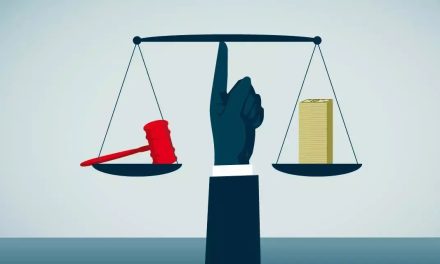
China’s judicial bodies—police, prosecutors, and courts—clearly treat state and private enterprises differently in economic and criminal cases. For example, regarding embezzlement: if an employee at a state enterprise commits embezzlement, police quickly intervene under the framing of “loss of state assets,” assisting with evidence-gathering and processing. If embezzlement occurs at a private enterprise, police are generally uninvolved, leaving the burden of proof on the enterprise itself—putting private owners in a very difficult position. At the prosecution and court level, cases involving state enterprises receive priority and fair handling according to law, with superior departments and government bodies often intervening on their behalf. Cases involving private enterprises, however, are generally handled according to individual prosecutors’ and judges’ personal preferences and styles—particularly cases involving private business owners, which tend to follow a principle of “harsher sentencing rather than lenient” wherever possible. There is an unwritten rule in Chinese courts that a lenient sentence for a private business owner risks triggering an investigation into whether the judge accepted bribes, while wrongly imposing a harsher sentence carries no accountability. This creates a systemic unfairness where cases involving private business owners in the police-prosecution-court system tend to be handled more severely.
5. Environmental and Safety Enforcement
In environmental and safety enforcement, private enterprises in China often face “unfair treatment” in the form of blanket “one-size-fits-all” campaign-style enforcement, selective enforcement, and excessive penalties—raising compliance and operating costs and distorting fair market competition. China’s environmental inspection authorities essentially apply two different standards to state versus private enterprises. For state enterprises, environmental and safety enforcement tends to be lenient, often subject to requests from local governments and state-asset management departments, with lighter penalties even when accidents occur. In actual enforcement, different enterprises face different standards depending on size or ownership type; some local regulators apply enforcement selectively, with private enterprises facing more frequent inspections and stricter penalty standards compared to state-owned or large foreign-invested enterprises. Environmental and safety issues at private enterprises are generally managed strictly, sometimes with deliberate obstruction. Within China’s broader social-stability control framework, environmental and safety concerns significantly affect private business operations—particularly in mining, where resources are largely reserved for state enterprises under environmental/safety pretexts, with private enterprises attempting to enter these sectors facing unfair or discriminatory treatment under the same justifications.
6. Public Procurement and Bidding
In actual public procurement, tendering parties often design “technical specifications” or “qualification reviews” specifically to exclude private enterprises. Common tactics include: tailor-made scale requirements blindly favoring large enterprises, such as requiring registered capital of hundreds of millions of yuan, or imposing rigid thresholds on employee numbers or total assets; excessive ownership and financial restrictions, such as requiring bidders to be “state-owned enterprises” or “government institutions,” or demanding excessively high bank guarantee ratios; abuse of special “honor” bonus points, where only enterprises holding certain industry-association awards or local honors receive higher scores—effectively excluding out-of-region or private bidders; unreasonable requirements for prior performance, such as requiring experience “serving comparably-sized large state enterprises or government projects,” automatically disqualifying newly transformed or small/medium private enterprises; and specifying particular brands or exclusive technical specifications copied directly from a major state enterprise’s standards or specific patents, creating differential treatment.
7. Recruitment and Hiring
China’s state sector, leveraging the government’s unlimited credit-backed employee benefits and security, draws top university graduates and talent into the system or state-owned sector, creating a talent “siphon effect.” For identical positions, recruitment by state enterprises can attract top-tier talent at lower compensation—exemplified by media reports of Tsinghua PhD holders working as traffic auxiliary officers in Beijing—because such positions offer entry into a system backed by the authoritarian government’s unlimited credit and welfare guarantees. This competition for system-insider jobs has itself generated rent-seeking and unfair practices. Private enterprises hiring for equivalent roles generally must offer salaries roughly 50% higher to attract candidates of comparable or even somewhat lower caliber. In labor disputes, if a state enterprise is involved, labor authorities tend to prioritize the enterprise’s interests over the employee’s; but if a private enterprise is involved, authorities generally prioritize employee interests over those of the private owner.
Across government administration and market-access approvals, financing, taxation, the judicial system, environmental and safety enforcement, public procurement, and recruitment, China’s private enterprises face differential—even discriminatory—treatment compared with state capital. Under increasingly high-pressure control policies, private business owners’ personal safety and property security go unprotected, and their social status is increasingly marginalized. Chinese financial scholar He Jiangbing, during field research with private entrepreneurs, relayed their sentiment: needing them is a reluctant necessity, while eliminating them is treated as a noble ideal. In an interview with RFA’s Chinese-language service, he stated that protecting private entrepreneurs’ income and property is essential—neither “distant fishing expeditions” nor “close-range targeting” should occur—and that without basic personal safety guarantees, entrepreneurs cannot operate businesses with peace of mind; this, he said, is simply common sense.
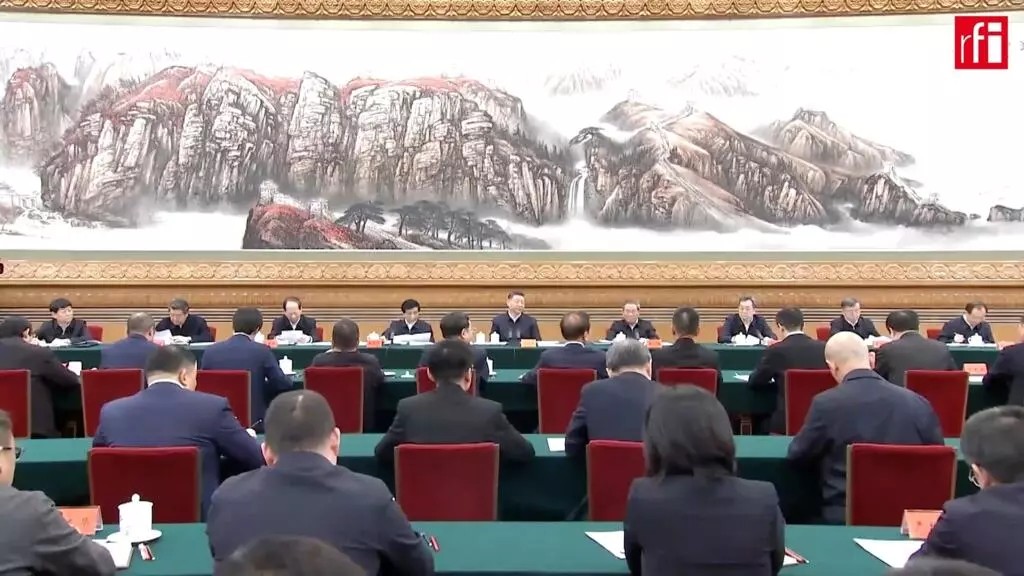
On February 17, 2025, China’s top leader met with a group of private entrepreneur representatives at an unprecedentedly high-profile dedicated meeting. Writing for VOA’s Chinese-language website, commentator Jiang Feng argued that looking back over the past decade-plus of hardship for China’s private economy, beyond all the issues openly discussed—beyond the 2018 and 2025 entrepreneur symposiums and the anticipated Private Economy Promotion Law, and after waiting over two years following the end of COVID—a meeting that could have rebuilt unity and trust once again left nearly everyone disappointed. Based on the still-arrogant tone of China’s leadership remarks and the composition of attendees, the fundamental situation facing China’s private economy has barely changed. This repeated cycle of upheaval, Jiang argues, shows the CCP has never abandoned the terror or dictatorial tactics of its revolutionary era, using such methods to manage society and the economy and to tame various powerful groups—whether old capitalists, party cadres, intellectuals, or today’s private business owners.
Jiang Feng further argues that, in fact, since 2012, private business owners and the private economy have repeatedly served as targets and scapegoats: first as targets of “anti-pornography” and “internet cleanup” campaigns, then subject to restrictions on “disorderly capital expansion,” then declared to have “completed their historical mission,” followed by concrete industrial policies such as “housing is for living, not speculation” and the dismantling of the for-profit tutoring industry. This stigmatization of the private economy has run through more than a decade of revisionist ideology, paired with the political trend of “the state advancing while the private sector retreats.” Behind these visible developments lies an undercurrent of the CCP’s deep distrust of private entrepreneurs and the private economy—an undercurrent that drives extralegal policies forming a systematic campaign of suppression targeting entrepreneurs, the broader middle class, public space, and liberal intellectuals. In Hong Kong, this undercurrent has been especially visible—from Jimmy Lai to Chow Hang-tung and others—figures the CCP views as instigators of “color revolutions.” The CCP regards the entire emerging bourgeoisie and civil society as the Party-state’s greatest threat, seeking to gradually eliminate and control them in stages and by group.
Some researchers argue that China’s private enterprises are also beneficiaries of the Chinese system, having accumulated wealth while supporting CCP rule. This offers another lens on the dual character of China’s private enterprises: within a socialist state under CCP leadership, private enterprises actively aligning with the government to compete for resources can be understood as adaptive survival behavior. Li Min-chen, a doctoral researcher in international security at the Fletcher School of Law and Diplomacy, writing for a Taiwan-based think tank, notes that the Chinese government’s “tech sovereignty” goals require private enterprises to align with state interests amid market competition—blurring the line between state and private enterprises and constraining the direction of corporate innovation. As global AI and tech-innovation landscapes become increasingly shaped by geopolitics, China’s pursuit of aligning market forces with national security may further compress the private sector’s independence, weakening its global competitiveness.
China’s private enterprises were never naturally aligned with the cause of freedom and rule of law. They drew close to government to gain access to resources; only after accumulating wealth did they begin to spontaneously sense that only the pursuit of freedom and rule of law could guarantee protection of their persons and property. Ultimately, it is this underlying anxiety among China’s private business owners—and their growing sense of crisis over the lack of guaranteed freedom and security for their persons and property—that has driven the increasing marginalization of private enterprise in China today.