By YiXiao
Changsha, China | March 20, 2026
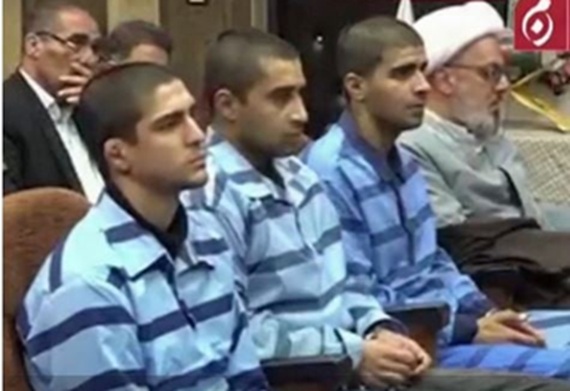
In the early hours of March 19, 2026, the gallows of Qom Central Prison fell silently. Saleh Mohammadi — a 19-year-old national wrestling champion — along with two other young protesters, had his brief life extinguished. Mohammadi should have continued competing on the international stage, embracing victory and glory with strong arms. Instead, for participating in anti-government demonstrations earlier that year, he was saddled with fabricated charges of “killing a police officer” and “waging war against God.” After torture, what passed for a trial concluded hastily — no defense counsel, no right of appeal. This was not justice. It was a theocratic regime’s bloody suppression of all dissent, cloaking fear in religious garb, repackaging skepticism as blasphemy, and sowing seeds of submission and despair across society. This is the essence of state terrorism: using public executions to intimidate the population, eliminate potential resistance, and suffocate an entire nation in silence.
Such tragedies pierce the heart. Those young people should have been spending ordinary moments with their families, their parents dreaming of futures ahead. Instead, everything dissolved into nothing. This is not merely Iran’s catastrophe — it is an alarm for the global conscience. It forces us to confront a stark reality: under the iron heel of autocracy, the dignity of ordinary people has been utterly stripped away, and the price of peaceful dissent is torture and death. What authoritarian regimes fear most is the awakening within the hearts of their people — once that flame ignites, it will consume the false foundations of their rule.
Since the Islamic Revolution of 1979, Iran’s theocratic system has transformed religion into an instrument of oppression, ruling internally through terror and projecting regional instability externally through proxy forces. Mohammadi’s death is merely the latest link in a long chain of tragedy. Alongside Syria’s Assad regime and Venezuela’s Maduro dictatorship, it reveals a pattern: tyrannies of differing ideologies all rely on systematic violence to maintain power, reject any peaceful transition, and drive their people into the abyss.
Syria’s suffering is particularly harrowing. When civil war erupted in 2011, Assad launched a brutal crackdown with external support. Barrel bombs rained down on cities; chemical weapons struck civilian neighborhoods. Hundreds of thousands died, and more than ten million were displaced. Families were torn apart in the rubble; children lost their childhoods, their eyes stripped of hope. Through secret prisons and arbitrary arrests, the regime manufactured an atmosphere of pervasive terror. The international community repeatedly condemned these acts, yet geopolitical calculations slowed meaningful response, allowing the disaster to continue. This suppression was not limited to the military sphere — it included the systematic persecution of civilians, utterly dismantling any organized resistance, and leaving the whole of society trapped in a cycle of enduring trauma, with hope for reconstruction rendered nearly unreachable.
Venezuela’s collapse is equally heartbreaking. Once the wealthiest nation in Latin America, it descended into total ruin under Maduro. Rigged elections, suppressed media, and looted resources triggered economic implosion; hyperinflation drove people to forage in garbage; more than seven million fled abroad, creating a massive migration crisis. Political opponents were imprisoned or assassinated, and the regime even colluded with drug networks, weaponizing narcotics as an instrument of influence. In January 2026, the United States conducted a precise operation to capture the Maduros and transfer them to justice — a low-casualty intervention that swiftly ended the dictatorship. A transitional government launched reforms; military restructuring and the release of political prisoners have already brought signs of stability. This was not a traditional invasion but a timely rescue of a suffering people. The weaponization of drugs not only poisoned neighboring societies but provided the regime with an additional revenue stream, forming a vicious cycle.
Iran’s situation has proven more persistent. The Khamenei regime exported terror through the Revolutionary Guards, supporting proxies that destabilized the Middle East. The 2022 hijab protests and a new wave of demonstrations in 2026 were both crushed with bloodshed; economic sanctions compounded by corruption plunged ordinary families into poverty; the nuclear program not only threatened regional security but served to deflect attention from domestic discontent. It was not until the joint US-Israeli strike on February 28 — precisely destroying nuclear facilities and severing command chains, eliminating senior leadership while avoiding mass civilian casualties — that a window for transition was opened. The democratic appeals of the crown prince in exile may yet coalesce the forces needed for genuine change. The domestic logic of oppression underlying nuclear ambition is clear: external threats are manufactured to redirect internal grievances and preserve concentrated power.
At the root of these catastrophes lies a regime’s loss of popular legitimacy, replaced by terror as the instrument of control. The international community — the United Nations system above all — bears responsibility for this state of affairs. Through cumbersome procedures and political compromise, it has indulged atrocity. The Security Council has repeatedly been paralyzed by Russian vetoes; the Rwandan genocide, the Srebrenica massacre, and the Yemen crisis have all demonstrated how bureaucratic delay enables tragedy. Officials busy themselves forming committees, writing reports, and convening summits, yet substantive relief rarely follows. Prolonged crises generate budgets and positions; certain great powers exploit them to maintain balance or sell arms. Aid is routinely diverted; human rights documents become waste paper. The debates in Geneva’s conference halls stand in cold contrast to the torture unfolding in the prisons beyond. This institutional machinery dilutes accountability and emboldens tyrants, who read in it a signal that time will exhaust international patience.
Yet this international bureaucratic indifference is not an isolated phenomenon. The United States — long self-proclaimed as a beacon of liberty — has itself, across multiple administrations, failed to fully escape the grip of bureaucratic inertia and political realism when confronting these humanitarian crises. This inertia is rooted in multiple factors: the complexity of decision-making mechanisms, a divided domestic public, the shadow of historical war trauma, and excessive caution toward the risks of military escalation. It has not only prolonged the suffering of oppressed peoples but has, at a deeper level, tested the moral core and strategic wisdom of American foreign policy.
Consider the Obama administration. In 2012, Obama publicly declared the use of chemical weapons by the Syrian regime a “red line.” In 2013, when Assad’s forces crossed that line by launching a poison gas attack on a civilian neighborhood, the international community expected the United States to honor its commitment and carry out limited military strikes to deter atrocities and protect innocents. Yet, beset by difficulties securing Congressional authorization, domestic anti-war sentiment, and fears of becoming entangled in another Middle Eastern quagmire, Obama ultimately pivoted to diplomacy — reaching an agreement with Russia on chemical weapons destruction. While this choice avoided direct conflict in the short term, it gave the Assad regime a reprieve to continue deploying barrel bombs and indiscriminate bombardment for additional years of civil war, producing hundreds of thousands of additional deaths and millions more refugees. Retrospective analysis suggests that this hesitation not only weakened American deterrence but allowed extremist forces like ISIS to rise and further complicate the security landscape. It reflects a characteristic bureaucratic logic: transforming moral responsibility into endless policy review and the construction of allied consensus, rather than decisive action.
Subsequent administrations faced similar dilemmas. During Trump’s first term, the “maximum pressure” sanctions on Iran and the 2020 targeted elimination of Soleimani demonstrated a degree of resolve — yet the response to Venezuela remained stuck at the level of economic sanctions, unable to quickly translate into structural change. The Biden administration, with diplomacy as its priority, resumed nuclear negotiations with Iran and applied graduated pressure on Venezuela; while these approaches reflected a multilateral preference, they achieved limited results due to the lagging effects of sanctions, the regime’s internal adaptability, and Congressional partisan gridlock. The chaotic scenes of the 2021 Afghanistan withdrawal further entrenched a collective memory of “intervention fatigue” — both the public and decision-makers became acutely sensitive to the costs of prolonged overseas operations, ensuring any new engagement was subjected to rigorous risk-benefit calculation. That calculation consistently prioritized short-term political costs over long-term humanitarian consequences.
Meanwhile, this American inertia reflects a broader structural challenge facing Western democracies in the post–Cold War era. Electoral cycles compel leaders to avoid high-risk decisions that might cost votes; intelligence and military bureaucracies emphasize controllability and low casualties, inclining toward delay or alternatives; and the lessons of Vietnam, Iraq, and Afghanistan have rendered “nation-building” a political taboo, nudging policy ever further toward risk aversion. The result is that tyranny gains precious breathing room and popular suffering is deferred indefinitely. The continued advance of Iran’s nuclear program, the spillover of the Syrian refugee crisis, and the destabilizing impact of Venezuela’s drug and migrant flows on regional stability are all intimately connected to this pattern. More fundamentally, it erodes the foundations of American exceptionalism: when a superpower founded on universal values chooses strategic restraint in the face of atrocity, not only do the victims lose hope — authoritarian powers worldwide read in that restraint a signal that time is on their side. This moral and strategic vacuum calls for a more resolute form of leadership, one capable of recalibrating the direction of the beacon.
Trump’s actions thus appear all the more necessary. They struck at the heart of tyranny through precision means, avoiding the catastrophe of total war while rapidly opening the possibility of reconstruction. This is a return to the founding spirit: in the face of evil, one must not stand aside but intervene with courage. As Will and Ariel Durant observed in The Lessons of History, dictatorship commonly arises from democracy’s extremities, and the cycle of tyranny originates in the concentration of power and the alienation of the people. Syria, Venezuela, and Iran are proof of this. Hugo, who condemned Napoleon III’s despotism and suffered exile for it, argued repeatedly that tyranny dies with the tyrant, and that any who defend the tyrant are enemies of liberty. Tolstoy viewed submission to tyranny as complicity in evil. These insights illuminate the present: precision action is not conquest — it is the overture to liberation.
To be explicit: the arrest of Maduro or the elimination of Khamenei’s leadership is not war — it is an extension of counterterrorism. The Maduro regime engaged in “narco-terrorism”; Khamenei funded a global network of terrorist proxies. Clausewitz observed that war is the continuation of politics, and that its center of gravity lies in the enemy’s will. Modern precision technology renders such strikes surgical, minimizing collateral damage. In Venezuela, reform has already begun. In Iran, the power vacuum may catalyze a democratic transition under the crown prince’s leadership, drawing on cultural traditions to stabilize society.
Yet we must also strongly condemn those politicians, writers, and artists who apologize for evil regimes. Certain Western politicians, invoking “anti-imperialism” or “the principle of sovereignty,” have opposed such precision actions. They ignore the plight of millions of Syrian refugees, the hunger of Venezuelan civilians, and the gallows awaiting Iranian protesters, yet portray American and allied intervention as “aggression.” Such apologetics constitute a moral betrayal — they indulge terrorist regimes in continuing to manufacture catastrophe and consign victimized peoples to even deeper despair. Likewise, some writers and artists have romanticized these regimes in their literary and artistic works, packaging them as heroes “resisting empire,” while averting their eyes from domestic torture chambers and public executions. Whether from ideological bias or personal calculation, they have abandoned basic humanitarian principles. Hugo himself — exiled for opposing despotism — argued time and again: tyranny dies with the tyrant, and those who defend tyrants are enemies of freedom. Today, those voices that defend the Maduro and Khamenei regimes are effectively lending cover to terrorism. They not only betray the lessons of history; they stand, morally, on the opposite side from the peoples who suffer.
Looking ahead, micro-precision interventions will become the prevailing approach, fusing technological capability with political intelligence. Iran may follow a hybrid path; Venezuela’s transition may become the model. Only by removing the core tyrant can structural problems be resolved. In sum, precision decapitation is not the continuation of war — it is the beginning of redemption. It ends tyranny at minimum cost and opens an era of freedom. It demonstrates that, in confronting terrorist regimes, political wisdom and precision action are superior to traditional conquest. Through such models, the international community may at last transcend the cycle of violence and move toward a stable order grounded in justice and liberty. Mohammadi’s tragedy, though heartbreaking, has become a catalyst for the awakening of civilians across the globe.
Finally, let us ground ourselves in fact, reject hypocritical apologia, and support those actions that genuinely liberate peoples. For only by removing tyrants can peace truly arrive.
The author’s point of view does not necessarily represent that of this journal.